





For security and surveillance lighting, 4000–5700K at CRI Ra70–80 does more for camera performance than raw wattage ever will. Colour cameras need neutral-to-cool light to separate detail at night, and the light has to land on the vertical surfaces the camera sees — faces, number plates, doors — not just on the floor. Here is how to pick CCT, CRI and output so the fixture feeds the camera instead of blinding it.
Why CCT and CRI decide what the camera sees
A surveillance camera is a colour sensor with fixed exposure. Under warm light (2700–3000K) night footage tends to wash toward amber, which flattens the difference between a grey jacket and a blue one. Under cool light (5000–5700K) the sensor’s white balance has more spectral information to work with, so edges, skin tones and vehicle colours separate cleanly. CRI matters for the same reason: an Ra70 source renders most colours acceptably, but low-CRI sources drop narrow parts of the spectrum and cameras inherit exactly those gaps.
The second half of the equation is geometry. Horizontal lux on the ground tells you nothing about whether a face at the door is visible; cameras grade scenes by vertical illuminance. A perimeter that measures 20 lux on the tarmac can still leave every face in silhouette if the optics throw the light down instead of across.
Choosing the colour temperature
| CCT | Character on camera | Where it fits |
|---|---|---|
| 3000K (warm) | Ambient, low glare, weaker colour separation at night | Residential perimeters, hospitality facades, dark-sky constrained areas |
| 4000K (neutral) | Balanced colour, comfortable for staff and neighbours | Car parks, building entrances, loading docks — the default choice |
| 5000–5700K (cool) | Best contrast and colour separation for colour cameras | Security perimeters, ports, logistics yards, utility compounds |
| 6500K (very cool) | Maximum crispness but harsh and blue-shifted to the eye | High-security zones prioritising camera output over comfort |
LOWCLED outdoor ranges cover 3000K–6500K: canopy and stadium fixtures ship in 3000/4000/6000K variants, wall packs span 3000–6500K, and the XWPL wall pack adds field-tunable CCT when a site has both a residential edge and a secure core.
Choosing the CRI level
| CRI | What it delivers | Where we supply it |
|---|---|---|
| Ra70 | Standard rendering; fine for general surveillance and wayfinding | Standard across flood, high bay, shoebox, stadium and wall pack ranges |
| Ra80 | Reliable colour identification — suspect and vehicle descriptions hold up | Optional on high bay, shoebox and wall pack series |
| Ra90 | Colour-critical identification and inspection | Optional on the high bay T series |
For evidence-quality footage, Ra80 is the sensible floor in entrance and identification zones; Ra70 remains acceptable for open perimeters where the camera only needs motion and shape.
How much light a camera actually needs
| Scene | Typical target (vertical) | Why |
|---|---|---|
| Perimeter overview, motion detection | 10–20 lux | Camera needs shape and movement, not detail |
| Entrances, doorways, face identification | 50–150 lux | Face recognition needs vertical light on the subject |
| Licence plate / ANPR zones | 100–200 lux on the plate plane | Plate retroreflection is angle-sensitive; uniform coverage beats peak intensity |
| Cash desks, secure lobbies (indoor) | 300–500 lux | Indoor camera exposure headroom |
Aligned with the practice framework of EN 62676-4 for video surveillance lighting; final values depend on the camera’s sensitivity, lens and exposure settings — coordinate with the CCTV integrator.
Avoid aiming fixtures into camera lines of sight: backlights and glare produce silhouettes and bloomed sensors. Wall packs with 90°–100° optics (WP, MWP series) are the natural choice because they wash the vertical plane the camera sees, and photocell versions switch on before the camera’s night mode struggles.
Match the fixture to the surveillance task
| Surveillance task | Recommended series | Configuration |
|---|---|---|
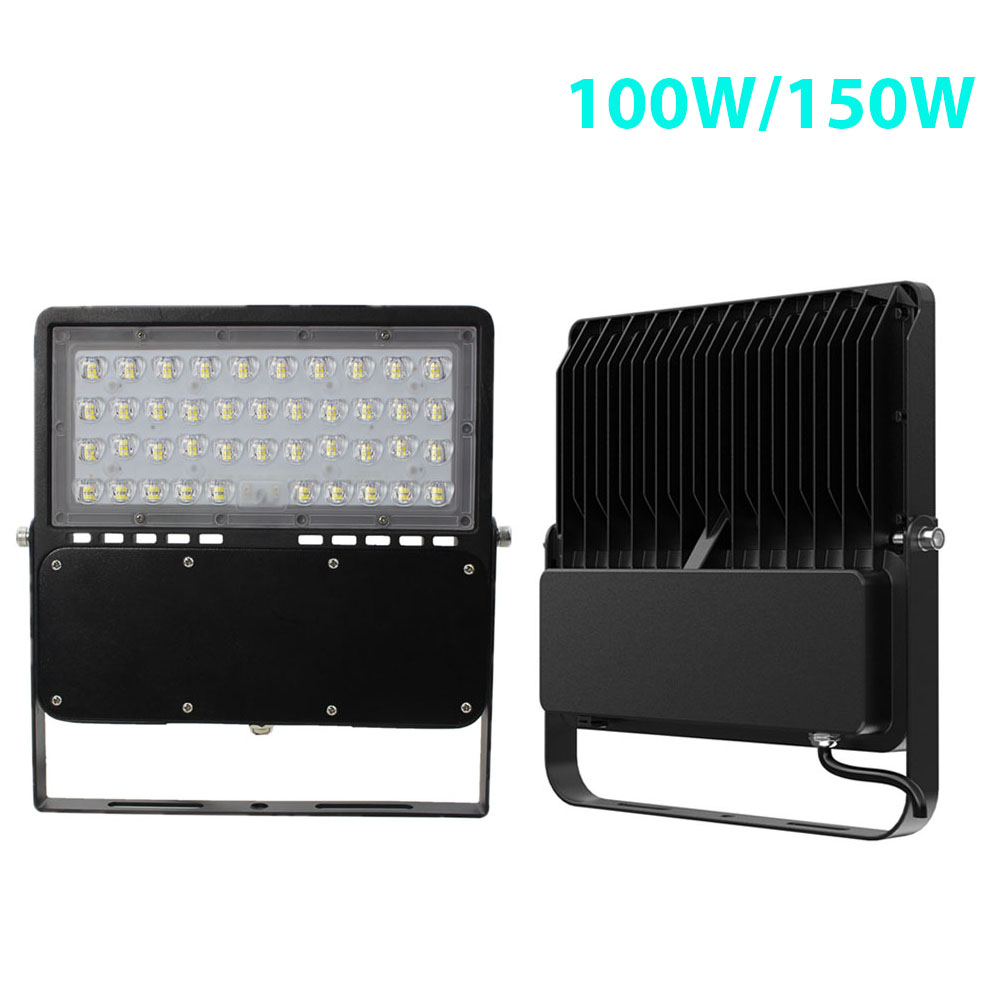
| Perimeter walls and yard edges | Wall pack WP 100–150W | 3000–6500K, Ra70, photocell |
| Doorways, stairwells, service corridors | MWP mini wall pack 20–30W | Built-in photocell, 3–8 m mounting |
| High-security perimeter with tunable needs | XWPL wall pack | Tunable CCT, UL PIR, emergency battery |
| Car parks (indoor decks) | Canopy CL 80–120W | 4000K or 6000K, 150° optic |
| Open yards and ports | MX flood or shoebox area light | 5000–5700K, Type III/V optics for uniformity |
| Stadium aprons and event security | PF stadium series | 3000–6500K, 10 KV surge for exposed sites |
Common design mistakes we see in the field
The first is lighting the ground and hoping the camera copes. Ground lux is easy to measure and easy to sell, but cameras grade vertical surfaces — swap one 30° flood for a 90°–100° wall-wash optic at the same wattage and face visibility usually improves more than doubling the wattage would. The second is cool-CCT-everywhere: 6500K on a hospital boundary reads harsh and clinical, annoys neighbours and buys almost nothing over 4000K. The third is ignoring the switch: a fixture without a photocell or sensor leaves the camera alone in the dark between dusk and the timer’s guess. Every wall pack series in the range carries a photocell option for exactly this reason, and the XWPL adds a UL-listed PIR with emergency battery for zones that must never go fully dark.
How to verify the result without a lab
One evening, one lux meter, one phone camera. Measure vertical lux at face height where people actually stand: the doorway, the plate plane, the stair core. Then look at the camera’s own night footage for four things — can you describe a face, read a plate, tell two jacket colours apart, and follow motion across the frame without smear? If any answer is no, the fix is usually one of: raise the vertical lux (widen the optic or add a wall pack), move the fixture out of the camera’s direct line, or step the CCT up one stop. Iterate once and the site is done; resist the temptation to buy more wattage than the camera can use.
CCT, CRI and surveillance FAQ
What colour temperature is best for security cameras?
Neutral to cool white: 4000K is the general-purpose choice, and 5000–5700K maximises the colour separation that night-time colour cameras rely on. Warm 3000K is pleasant for people but flattens colour differences on footage.
Does CRI matter for CCTV lighting?
Yes. CRI describes how completely the source renders colours, and the camera inherits whatever the source provides. Ra70 is adequate for overview scenes; Ra80 gives evidence-grade colour identification at entrances and identification zones.
How many lux does a security camera need?
Plan by vertical illuminance on what the camera sees: 10–20 lux for perimeter overview, 50–150 lux on faces at entrances, 100–200 lux on the plate plane for ANPR. The camera’s own minimum-illumination spec is no substitute for scene lighting.
Is 6500K better for CCTV than 4000K?
Marginal, and usually not worth it. 6500K adds crispness but looks harsh and blue to people, and over-cool light can worsen the perception of the site for staff and neighbours. 4000–5700K covers virtually every surveillance need.
Why do faces look black on camera even when the ground is bright?
The light is landing horizontally, not vertically. Cameras see vertical surfaces, so use wall-washing optics (90°–100° wall packs) and position fixtures so the subject is lit from the camera’s side, never backlit.
Can one fixture serve both people and cameras?
Yes with tuning. XWPL wall packs offer tunable CCT so a site can run 4000K at the residential edge and 5700K at the secure core; the built-in PIR keeps zones dark until movement, which both saves energy and reduces light nuisance.
Data sources: EN 62676-4 (video surveillance application guidance); IES lighting practice for parking facilities and exterior security lighting. CCT/CRI and option claims follow the specifications published on this site’s product pages (canopy 3000/4000/6000K CRI>70; wall pack 3000–6500K Ra70 standard Ra80/90 optional; high bay Ra80/Ra90 optional).
Video: 100W-2000W Outdoor waterproof LED Stadium Sports Flood Light - LOWCLED
About this LED flood light
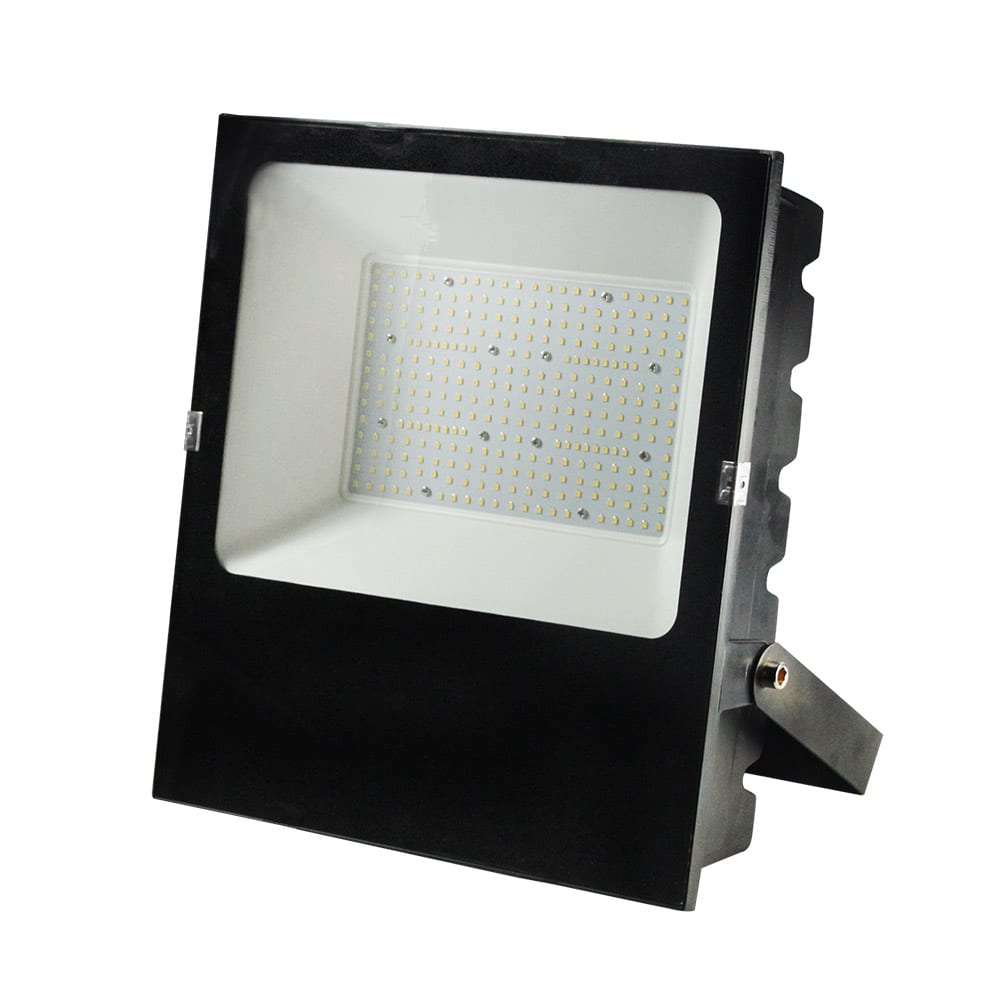
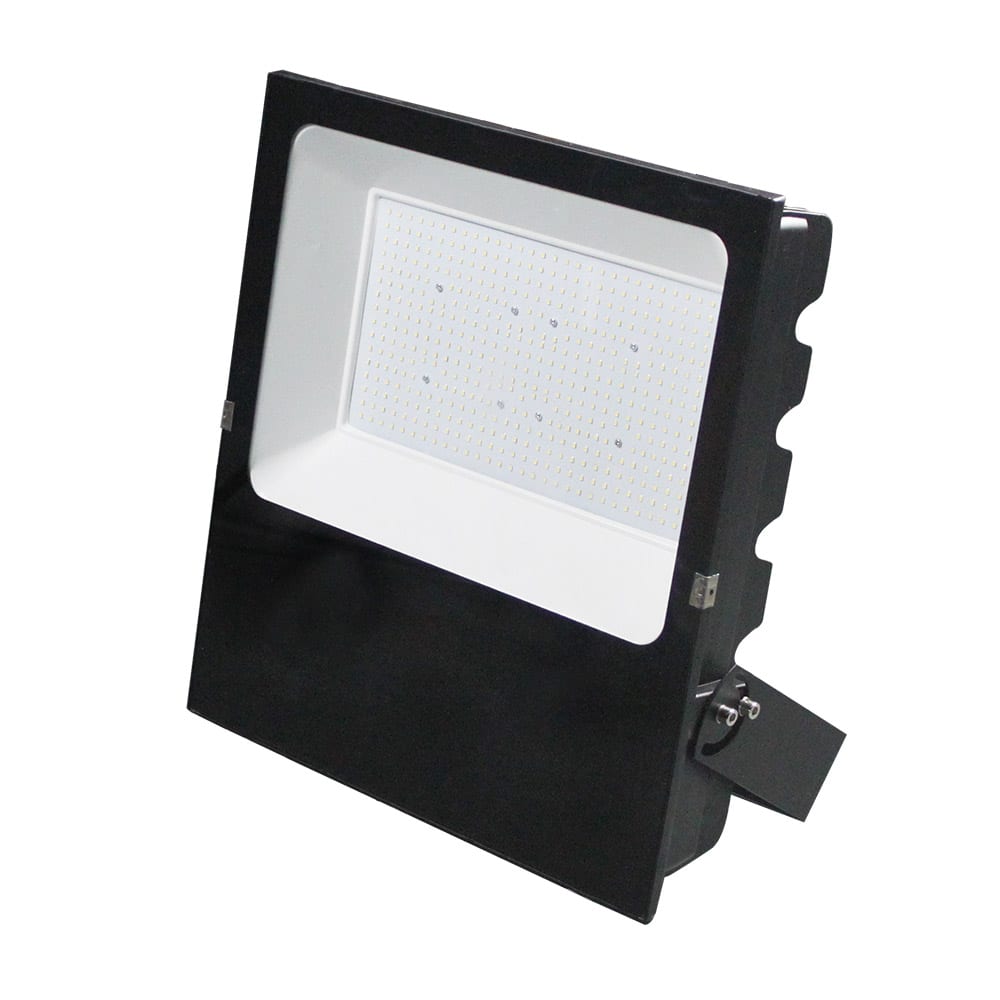
LOWCLED outdoor LED flood lights are built for building facades, billboards, gardens, car parks, sports courts and industrial yards. The 4A / 4S / FLU modular series covers 30W to 2000W with 100-120 degree beam angle, tempered glass lens and a die-cast aluminium heat sink that keeps the LED junction temperature low even in summer.
Every fixture passes a 24-hour aging test and an IP66 waterproof test before shipment. With 150 lm/W, 10KV surge protection and 5-7 years warranty options, they replace 250W-2000W metal halide lamps and cut power consumption by around 70%.
Related products from LOWCLED
Security Lighting for CCTV: Colour Temperature and CRI Related Video:
Video: LED Flood Light Test before delivery - LOWCLED
We thinks what customers think, the urgency of urgency to act during the interests of a purchaser position of theory, allowing for much better good quality, lower processing costs, prices are extra reasonable, won the new and old buyers the support and affirmation for Led Sports Light, Best Led Light, Light Fixture, In the increasingly competitive market, With sincere service high quality products and well-deserved reputation, we always offer customers support on products and techniques to achieve long-term cooperation. Living by quality, development by credit is our eternal pursuit, We firmly believe that after your visit we will become long-term partners.