





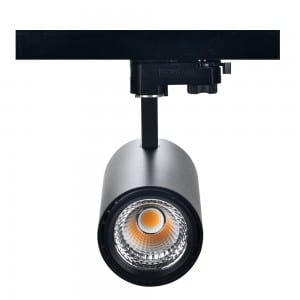
A 400W metal halide fixture is replaced by a 200W LED flood light; a 1000W metal halide needs a 400W LED module. The conversion works in delivered lumens, not watts. An old HID system delivers about 65 lm/W once ballast draw and lamp depreciation are counted, while a LOWCLED LED flood light delivers 90–170 lm/W depending on the series. Match the lumens, and the wattage halves or better.
Why the HID to LED conversion is done in lumens, not watts
A wattage-for-wattage swap is the most common mistake in HID replacement projects. A 400W metal halide lamp does not deliver 400 watts of light — it produces roughly 36,000 initial lamp lumens, and by the time you subtract the ballast draw (10–20% extra input power), the reflector and lens losses (15–25%), and the lumen depreciation of an aging lamp (30% or more within the first two years), the delivered output of the system is closer to 26,000 lumens. That is the number the replacement has to match.
LED flood lights are rated in delivered luminaire lumens, not lamp lumens, because the driver, optics and LED degradation are all included in the rating. A 200W LOWCLED 4S flood light rated at 130 lm/W delivers 26,000 lumens out of the box and holds that output through its rated life. That is why the chart below replaces a 400W HID system with a 200W LED fixture — and why the saving on the electricity meter is 55–65%, not the 50% you would expect from the wattage figures alone.
Typical output of common HID lamps
Before converting, establish what the old system actually delivers. The table below lists the typical initial lamp lumens for the most common high-pressure sodium (HPS) and metal halide (MH) lamps, together with the system figure we use for replacement sizing across this site: wattage × 65 lm/W, which already includes ballast losses and lumen depreciation.
| Lamp | Typical initial lamp lumens | System lumens (65 lm/W basis) |
|---|---|---|
| 70W HPS | 6,300 lm | 4,550 lm |
| 100W HPS | 9,500 lm | 6,500 lm |
| 150W HPS | 16,000 lm | 9,750 lm |
| 250W HPS | 27,500 lm | 16,250 lm |
| 400W HPS | 50,000 lm | 26,000 lm |
| 70W metal halide | 5,600 lm | 4,550 lm |
| 100W metal halide | 8,500 lm | 6,500 lm |
| 150W metal halide | 13,500 lm | 9,750 lm |
| 250W metal halide | 20,500 lm | 16,250 lm |
| 400W metal halide | 36,000 lm | 26,000 lm |
| 1000W metal halide | 110,000 lm | 65,000 lm |
| 2000W metal halide | 220,000 lm | 130,000 lm |
Initial lumens follow ANSI/IEC lamp catalog data (IEC 60662 for high-pressure sodium, IEC 62035 for metal halide). Actual output depends on lamp brand, ballast type and burn position; the system figure is the working value for replacement sizing, not a laboratory constant.
The full HID to LED conversion chart for flood and area lighting
The chart below maps each common HID flood or area fixture to a LOWCLED LED flood light from our LED flood light range (10W–2000W). The LED output column shows the real specification-sheet range of the recommended model, and the saving column compares the metered draw of the old system (lamp plus ballast) with the new LED fixture at full output.
| Existing fixture | Old system draw | System lumens | LED replacement | New output | Energy saving |
|---|---|---|---|---|---|
| 70W MH / HPS | ≈90W | 4,550 lm | 30W 4S flood | 4,200 lm | ≈67% |
| 100W MH / HPS | ≈125W | 6,500 lm | 50W 4S flood | 6,500 lm | ≈60% |
| 150W MH / HPS | ≈185W | 9,750 lm | 70W 4S flood | 9,100 lm | ≈62% |
| 250W MH / HPS | ≈300W | 16,250 lm | 120W 4S flood | 15,600 lm | ≈60% |
| 400W MH / HPS | ≈465W | 26,000 lm | 200W 4S / MX flood | 26,000 lm | ≈57% |
| 600W HPS | ≈700W | 39,000 lm | 240W MX flood | 33,600–43,200 lm | ≈66% |
| 1000W metal halide | ≈1,080W | 65,000 lm | 400W 4M flood | 56,000–68,000 lm | ≈63% |
| 2000W metal halide | ≈2,150W | 130,000 lm | 800W 4M flood | 112,000–136,000 lm | ≈63% |
Saving compares lamp-plus-ballast draw with LED wattage at full output. Where the old circuit is dimmed, timed or partly dead, the metered saving is larger. Confirm the exact equivalent against the lumen column of the model datasheet before ordering.
The same logic applies to other HID families. HPS wall packs in the 70W–250W band convert to LOWCLED wall pack models between 40W and 120W from our LED wall pack range; shoebox/pole-top fixtures in the 250W–400W band convert to our LED shoebox area lights (60W–400W) one-for-one. For sports fields specifically — where the 1000W–2000W metal halide brackets dominate — see our dedicated 1000W sports light LED replacement guide.
Warehouse and high bay conversions
Inside buildings the same lumen rule applies, but the fixture layout usually survives unchanged, so the replacement also has to fit the old mounting spacing. The chart below is the standard high-bay conversion; all recommended models come from our UFO and linear high bay range.
| Existing high bay | System lumens | LED equivalent | Power saved |
|---|---|---|---|
| 250W metal halide | 16,250 lm | 150W UFO (19,500 lm) | ≈55% |
| 400W metal halide | 26,000 lm | 200W UFO (30,000 lm) | ≈58% |
| 400W HPS | 26,000 lm | 200W UFO (30,000 lm) | ≈58% |
| 600W metal halide | 39,000 lm | 300W M-series UFO (42,000+ lm) | ≈57% |
| 1000W metal halide | 65,000 lm | 2 × 200W UFO or 400W linear high bay | ≈55% |
For ceiling heights, spacing grids and area-per-fixture figures at each power level, use our high bay lighting layout guide together with this chart.
What lux level should the replacement deliver?
Converting wattage is only half the job. Before ordering, decide the maintained illuminance the new system must deliver, because that — not the old wattage — is what determines the correct LED model. The values below follow common practice under EN 12464-1 (indoor workplaces) and EN 13201 (outdoor road and area lighting).
| Application | Target maintained lux | Typical existing setup |
|---|---|---|
| Storage aisles, bulk warehouse | 100 lux | 250W MH high bays |
| Packing stations, light assembly | 300 lux | 400W MH high bays |
| Fine inspection, precision workshop | 500 lux | 400W+ MH high bays |
| Outdoor car park, general yard | 10–20 lux | 150W–400W flood or shoebox |
| Loading bays, perimeter security | 20–50 lux | 70W–250W wall pack or flood |
If the old installation was over-lit — common when the lamps were specified years ago — the conversion is also the moment to right-size the lux level and save more than the wattage table alone suggests.
Check beam angle and mounting height before you order
A metal halide lamp radiates in almost every direction and leans on its reflector; an LED flood light carries a fixed optic. If the old fixture threw light 40 metres or more, the standard 120° flood optic is wrong even when the lumen count matches — specify a 30° or 60° optic instead. Mounting height drives the same decision: the higher the pole, the narrower the beam and the more precise the aiming needs to be.
| LOWCLED flood (4S series) | Output | Mounting height | Typical use |
|---|---|---|---|
| 30W | 4,200 lm | 4–6 m | signage, small yards |
| 50W | 6,500 lm | 5–8 m | entrances, walkways |
| 100W | 13,000 lm | 6–10 m | car parks, facades |
| 200W | 26,000 lm | 8–12 m | yards, building perimeters |
| 400W | 60,000 lm | 12–18 m | logistics yards, high masts |
| 600W | 84,000 lm | 15–20 m | ports, large yards |
| 1000W | 140,000 lm | 20–30 m | high mast, stadium practice |
| 2000W | 280,000 lm | 25–40 m | stadium, mining, industrial |
Worked example: a 20-fixture yard retrofit
Take a storage yard with 20 x 400W metal halide floods running 10 hours a night. Each fixture draws about 450W with its ballast, so the installation draws 9 kW — roughly 32,850 kWh per year. Replacing one-for-one with 20 x 200W 4S floods cuts the draw to 4 kW, about 14,600 kWh per year: a saving of roughly 18,250 kWh, or 56% of the electricity. At $0.12 per kWh that is about $2,190 per year before maintenance.
The second saving is lamp changes. Metal halide lamps need replacement every two to three seasons and each change means a boom lift or a climber on an 8–12 m pole. The LED fixtures are specified for 50,000–100,000 hours of rated life, which at 3,650 hours a year is 13–27 years of operation — most buyers treat lamp changes as eliminated, not merely reduced.
HID to LED conversion FAQ
What is the rule of thumb for converting metal halide to LED?
Divide the HID wattage by 2 to 2.5. A 400W metal halide becomes a 160W–200W LED; a 1000W metal halide becomes a 400W LED. The rule assumes LED efficiency of 130–150 lm/W, which is what our flood and high bay series deliver. Always confirm with the lumen columns of both tables, because ballast draw and lamp age move the old side of the equation.
Can I replace a 400W metal halide flood light with a 200W LED?
Yes, in most cases. A 400W metal halide system delivers about 26,000 lumens once ballast losses and lamp depreciation are counted; a 200W 4S flood light produces 26,000 lumens and holds that output for its rated life. Check the beam angle: if the old fixture lit a surface more than 40 m away, order a 30° or 60° optic instead of the standard 120°.
How many lumens does a 1000W metal halide lamp produce?
Typically 110,000 initial lamp lumens. The working system figure — ballast losses and depreciation included — is about 65,000 lumens, which is why a 400W LED flood at 140–170 lm/W replaces it. For sports-field conversions at this power level, see the 1000W sports light replacement guide.
Do I need to bypass the ballast when converting to LED?
Yes. LED fixtures carry their own driver and connect directly to mains voltage. Leaving the old ballast in the circuit wastes a further 10–20% of power and is a common cause of premature failures after retrofit. If the old circuit includes a capacitor for power-factor correction, have the electrician remove the whole HID gear tray.
Why does the LED retrofit look less bright than the old lamp?
Two reasons, both measurable. First, the old lamp was probably running at 60–70% of its initial lumens by the time of the retrofit, so the memory of its brightness is inflated. Second, metal halide light (4000–4500K) scatters more in the eye than high-pressure sodium (2200K) at the same lux level. Aim the comparison at the lux meter on the ground, not at the fixture.
Will the converted installation still qualify for utility rebates?
In most North American rebate schemes, qualification follows the fixture, not the conversion: the model number must be DLC-listed. LOWCLED DLC-listed models are supplied with the listing data for the application, and CE, RoHS, SASO, ETL and SAA certification is available across the range. Ask for the DLC listing of the specific wattage before ordering.
Data sources: HID lamp lumens follow ANSI/IEC catalog figures (IEC 60662 high-pressure sodium, IEC 62035 metal halide); the 65 lm/W system basis is consistent with U.S. DOE lighting lifecycle assumptions. LED output figures are LOWCLED specification-sheet values; IES LM-63 photometric files are available for the 4A flood series and ASSLB solar street series on request.
Video: 100W-500W IP66 Waterproof Outdoor LED Flood Light 4S - LOWCLED
About this LED flood light
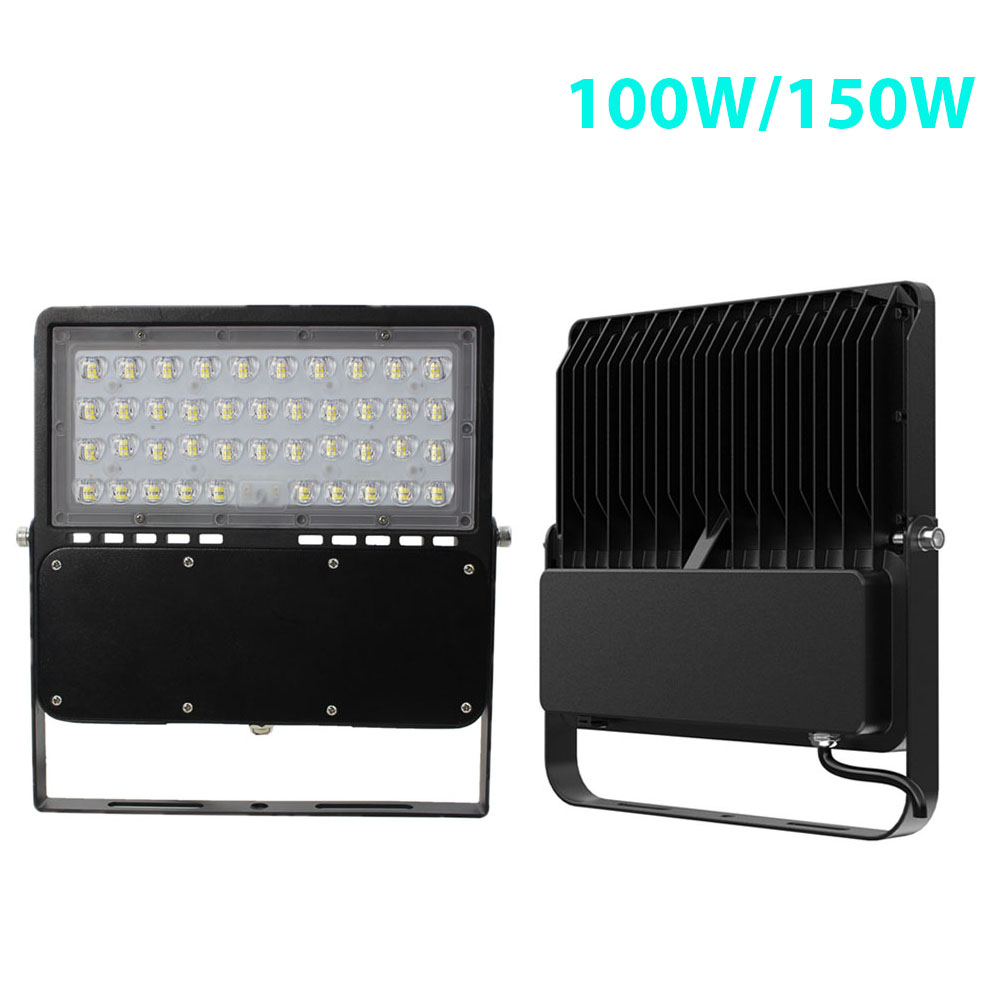
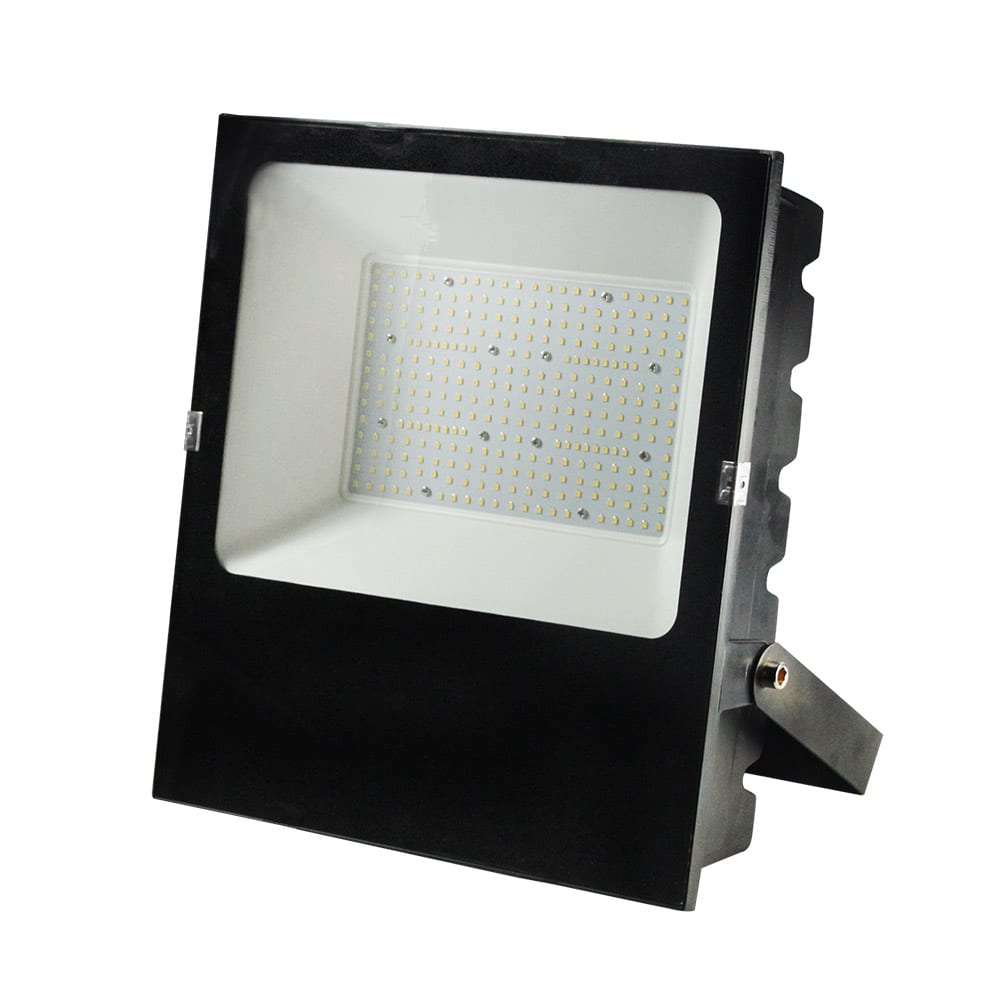
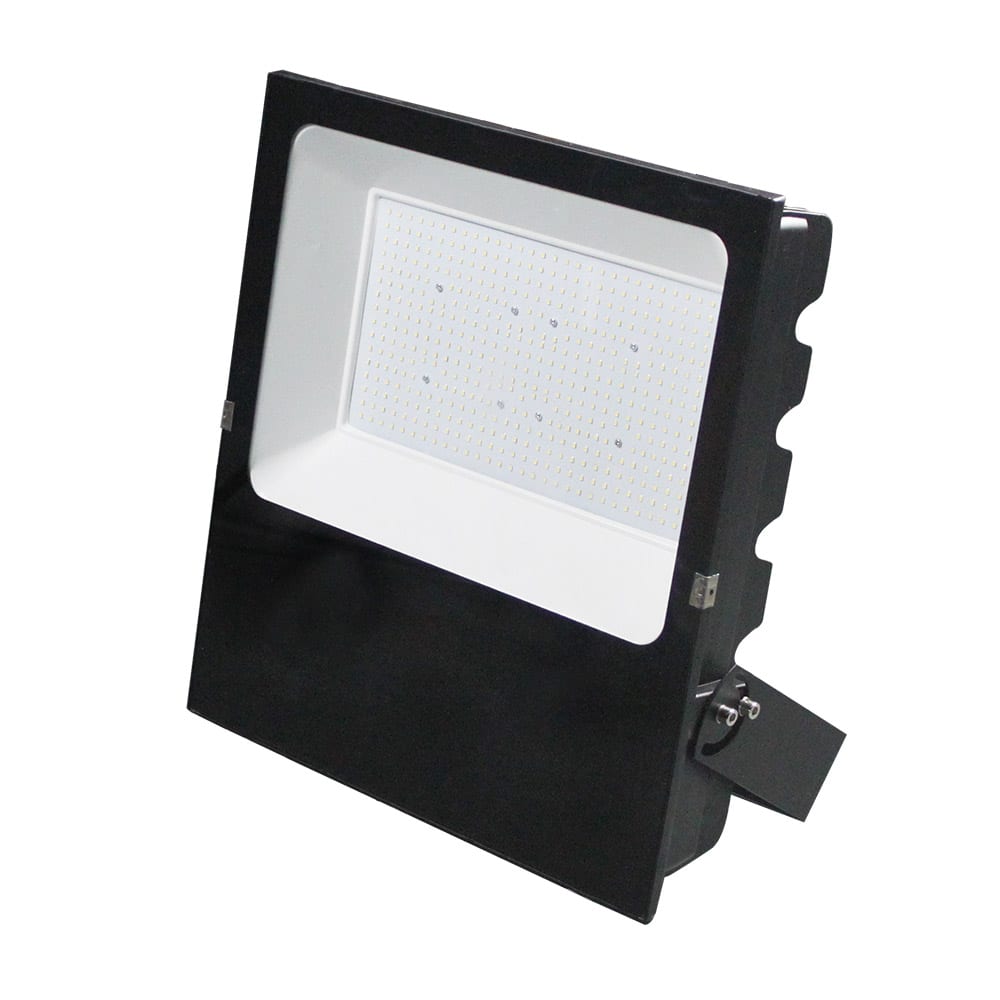
LOWCLED outdoor LED flood lights are built for building facades, billboards, gardens, car parks, sports courts and industrial yards. The 4A / 4S / FLU modular series covers 30W to 2000W with 100-120 degree beam angle, tempered glass lens and a die-cast aluminium heat sink that keeps the LED junction temperature low even in summer.
Every fixture passes a 24-hour aging test and an IP66 waterproof test before shipment. With 150 lm/W, 10KV surge protection and 5-7 years warranty options, they replace 250W-2000W metal halide lamps and cut power consumption by around 70%.
Related products from LOWCLED
HID to LED Conversion Chart: Metal Halide & HPS Replacement Related Video:
Video: 5 Years warranty IP65 Outdoor waterproof Aluminum All in one solar led street light ASSLS - LOWCLED
Our organization promises all customers with the first-class products and solutions and the most satisfying post-sale service. We warmly welcome our regular and new clients to join us for Led Canopy Bulb, Led Lighting, Led Lights Online, We take measure at any expense to achieve essentially the most up-to-date equipment and approaches. The packing of nominated brand is our a further distinguishing feature. The items to assure years of trouble-free service has attracted a great deal customers. The solutions are obtainable in improved designs and richer assortment, they're created scientifically of purely raw supplies. It readily available in a variety of designs and specifications for your selection. The most recent kinds are a great deal better than the preceding one particular and they are quite popular with lots of prospects.